
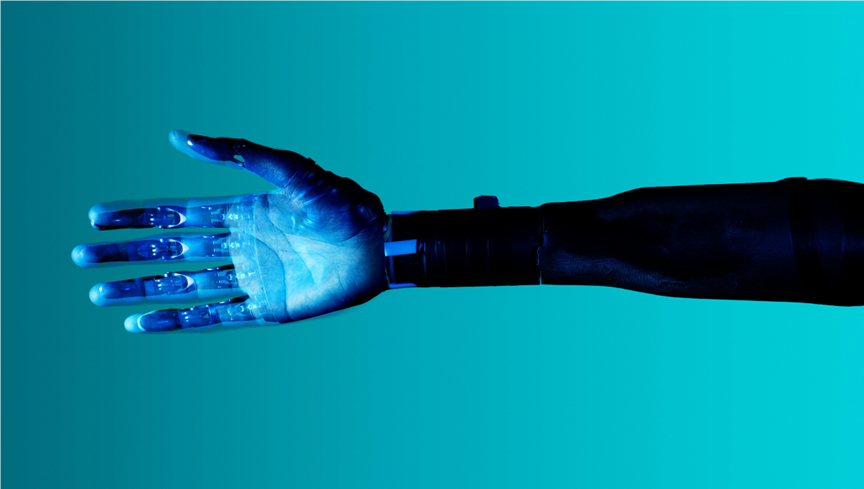
Cedric Price famously said, “Technology is the answer, but what is the question?” The English Architect may not have known much about Technology, but he knew what it could become.
Price imagined a building that could think for itself. Walls moved, ceilings adjusted, spaces rearranged, all based on how people interacted with them. This is a concept far ahead of its time, even compared to most homes today.
His vision wasn’t just about clever mechanics; it was a powerful ideology that technology must respond. This vision reminds us that technology doesn’t exist in a vacuum; it solves problems. Yes, this is only when we truly understand where the question mark is.

Humans are natural experimenters, always pushing boundaries and disrupting norms. In healthcare, for example, technology has transformed human care: think of AI-powered imaging tools that detect diseases earlier than ever, or telemedicine platforms that bring doctors to remote villages. These innovations are answers to clear questions. How do we improve diagnosis? How do we expand access? What if we turned the lens around? What if technology isn’t just the solution, but the question itself, inviting healthcare to provide answers rooted in empathy and care?
There’s no arguing the impact technology has had on healthcare. Dr. Eric Topol, a world-renowned cardiologist and digital health advocate, has been one of the loudest voices championing the integration of Technology in modern medicine.
In his book, The Patient Will See You Now (2015), Topol explores how digital tools have shifted the power dynamic in healthcare, giving patients unprecedented access to information, diagnostics, and autonomy.

We often celebrate how technology disrupts healthcare with robots performing surgeries, smart monitors tracking vital signs 24/7, and apps reminding patients to take medications. However, the reverse is just as compelling: healthcare’s values can disrupt technology’s mindset.
Healthcare operates in high-stakes environments where sensitivity, ethics, and human life are paramount. Imagine applying this careful, empathetic mindset to technological development.
Google’s DeepMind, for instance, partnered with the NHS not only to develop AI but also to create transparent ethical frameworks guiding its use. It shows us that Technology is evolving with healthcare’s ethical sensitivity. This disruption challenges Technology to slow down, listen, and prioritize human impact over raw speed or efficiency.
Building on Cedric Price’s vision of Technology as a solution, a new perspective invites us to see Technology not merely as a tool that solves problems, but as a question that provokes reflection and responsibility.
Technology challenges us to ask: How should it behave in our lives? How can it grow with us, attuned to our needs and values, instead of simply serving us? This shift turns the traditional dynamic upside down. Rather than Technology passively responding, it actively asks about its purpose and impact.

In this ongoing conversation, healthcare, which is one of humanity’s oldest and most human-centered practices, has the potential to take the lead. Grounded in ethics and sustainability, healthcare can guide technology toward solutions that prioritizes well-being over efficiency alone.
By actively leading this dialogue, healthcare steers technological development away from cold automation or unchecked innovation and nudges it instead toward meaningful, ethical, and sustainable growth. The partnership between healthcare and technology becomes less about quick fixes and more about co-creating a future where Technology grows responsibly, respecting human dignity and the complex needs of society.

The mirror effect suggests that two systems reflect qualities to each other, not just passively, but transformatively. Technology, when positioned as a question, becomes a mirror that reflects our societal values, ethics, and blind spots. Healthcare, being deeply rooted in care, precision, and human connection, can look into that mirror and see not just what Technology is doing, but what it should be doing.
Finally, we see Technology growing more sensitive, inspired by healthcare’s core principles. Consider cybersecurity, an area increasingly crucial to both fields. Healthcare demands absolute privacy and zero tolerance for error because lives are at stake. Sensitivity of information has pushed cybersecurity to evolve from rigid one-size-fits-all rules to more nuanced, context-aware systems that monitor behavior and adapt defenses dynamically.

Products like IBM’s QRadar or Splunk’s Security Orchestration tools now blend machine precision with human-like judgment, a leap influenced by healthcare’s uncompromising standards. What if the next breakthrough in Technology isn’t an invention, but an intention?
To redefine Technology, we must begin by asking questions where theory meets practice. Below are some key questions Technology might ask and how healthcare could provide thoughtful, human-centered answers:

We’re used to Technology arriving with answers, fast, sleek, and certain. Sometimes, it’s the most radical move to ask, to listen, and to be reshaped by something older and wiser.
When healthcare enters the conversation, it doesn’t just ask for better tools; it offers better values. This isn’t a handover of power; it’s a dialogue—one where healthcare teaches Technology how to grow, not just smarter, but more human. Perhaps the future of innovation is not about having all the answers, but about knowing which questions are worth asking altogether.





Osowa Tejiri says:
Oh my goodness!
This is mind blowing and very insightful!
I believe that in this era of health data and technology, we really need to know this
Jewel Obada says:
Thank you so much !!!